


By: Samer Majzoub
Special to the Montreal Gazette
The campaign details aside, Zohran Mamdani’s victory as mayor of New York City is not merely a triumph against all odds, it is a truly earth-shaking event in the traditional American political landscape.
Mamdani’s rise from a community organizer to the helm of one of the world’s most influential cities represents far more than a political upset. It is a sign of democratic renewal, a reminder that the public sphere is not reserved for elites, but can be reclaimed by those who have long been pushed to the margins of decision-making.
At a time when many citizens, especially youth, view politics as distant or futile, Mamdani’s victory reawakens the belief that civic engagement still matters. His campaign did not emerge from corporate boardrooms or political dynasties, but from the streets, classrooms and grassroots movements of everyday people.
It is the story of individuals who saw themselves not as spectators of democracy, but as its active participants.
This moment invites us to reflect on what civic engagement truly means. It goes far beyond casting a ballot every few years; it is about ongoing participation, questioning, organizing, and standing up for justice.
Democracy thrives not when citizens are passive consumers of politics, but when they become co-creators of the social contract. Mamdani’s success embodies that principle: It is the triumph of engagement over apathy and of collective hope over political fatigue.
For youth in particular, this victory carries an empowering message. From Montreal to New York to Nairobi, young people are too often told to wait their turn or leave politics to “the professionals.” Mamdani’s story tells them the opposite that their voices, when united and persistent, can disrupt even the most entrenched systems.
His campaign was not only about winning votes; it was about reclaiming dignity, belonging and agency for communities too often made to feel peripheral to national conversations.
Equally important, his victory underscores the strength of inclusive representation. When individuals from diverse backgrounds reach positions of leadership, it does not merely diversify politics; it strengthens democracy itself. It challenges stereotypes, opens new dialogues and builds bridges across divides.
Political participation, after all, is not an abstract right but a lived practice one that must continually evolve to reflect the societies we are becoming.
Yet the election is only the beginning. Winning may prove to be the less complicated part of Mamdani’s story. Ahead lie immense challenges: governing a complex city, balancing ideals with pragmatism, addressing the unease that often accompanies change, uniting New Yorkers from diverse backgrounds, and confronting institutional inertia.
Every reform-minded leader faces the tension between the urgency of transformation and the resistance of the establishment. The true measure of Mamdani’s impact will not lie in early headlines, but in the depth and durability of the change he inspires.
Still, even before taking office, his victory has already achieved something remarkable. It reminds us that democracy, though facing many hurdles today, is far from dead. Its renewal depends not on charisma, but on engagement, participation and courage.
Mamdani’s triumph rekindles faith in the idea that democracy — imperfect as it may be for some — remains the most human form of governance, because it belongs to those who dare to believe in it.
For many, especially those on society’s sidelines, this victory should serve as an invitation: to reimagine our civic spaces, nurture young leaders and build communities where engagement is not exceptional but expected.
The future of democracy will not be secured by cynicism or despair, but by ordinary people who step forward in local councils, school boards, neighbourhood associations and city halls to claim their rightful place in shaping our shared destiny.
In the end, Mamdani’s election is not just about one man’s success; it is about the enduring vitality of civic will.
It is a reminder that democracy, at its core, is an act of faith, faith that people, when given the chance, can rise above division and renew the institutions meant to serve them.
Samer Majzoub is co-founder and president of the Canadian Muslim Forum, a Montreal-based pan-Canadian organization dedicated to promoting inclusion, dialogue, civic engagement and active citizenship.
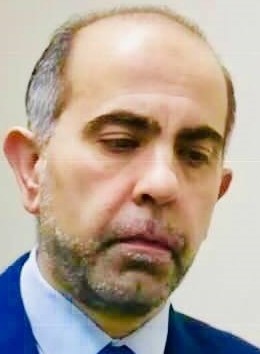
photo credit facebook page of Zahran Mamdani


151 مشاهدة
10 فبراير, 2026
640 مشاهدة
20 نوفمبر, 2025
248 مشاهدة
08 نوفمبر, 2025